Feature
CEO & VIP Offices
Boardrooms, private offices, and VIP suites across Oman’s leading institutions.
01
Executive offices in the Middle East carry a signature rarely seen outside of the region. The emphasis is usually placed not on individual tastes and preferences, but rather on acting as an extension of the city itself and its magic.
VIP offices are expected to project authority and offer warm welcomes within the same five minutes, making it important to strike a balance with the right color story, materials, and art pieces.
02
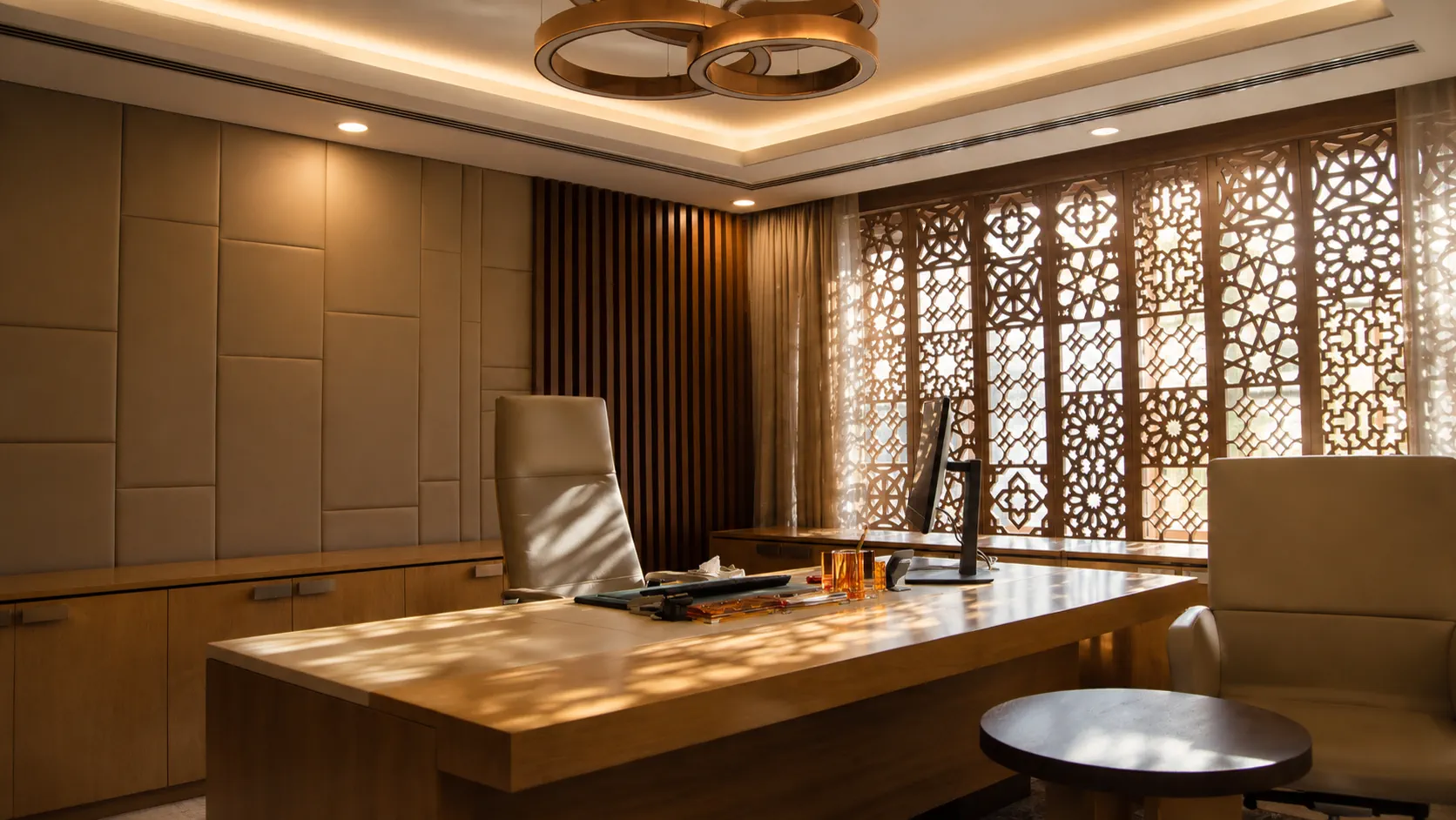
Walnut, brass, travertine, and leather occur across most of our projects for the way they age. Not unlike dependable, sound authority, these materials gain character and warmth over time.
Where a screen or lattice appears, it filters Oman’s sharp midday light into something a desk can sit under all afternoon, benefiting from different plays of patterns as the sun moves through the sky.
03
The Welcome Experience
Before guests see the office itself, there are typically areas that stage their arrival.
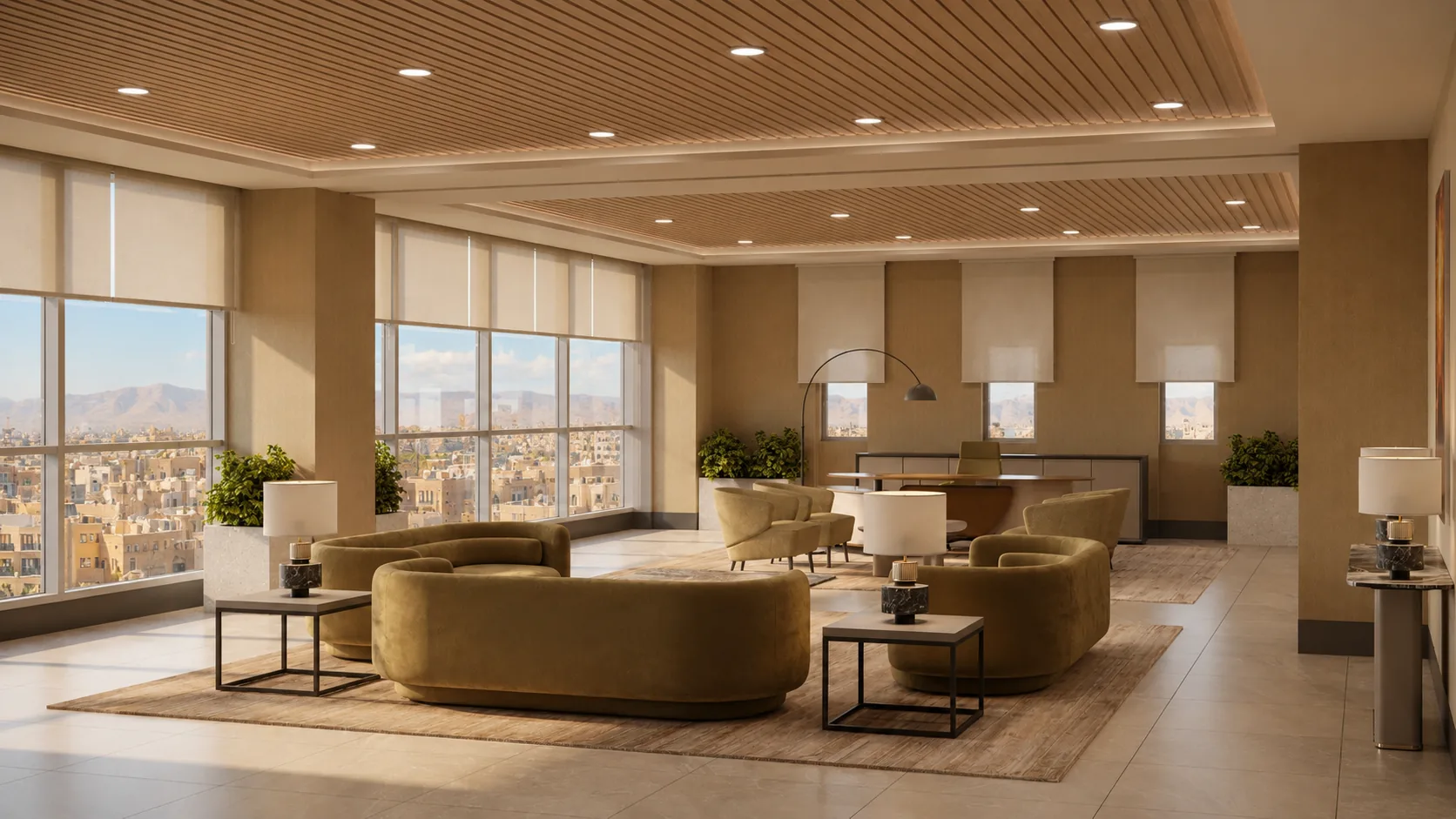
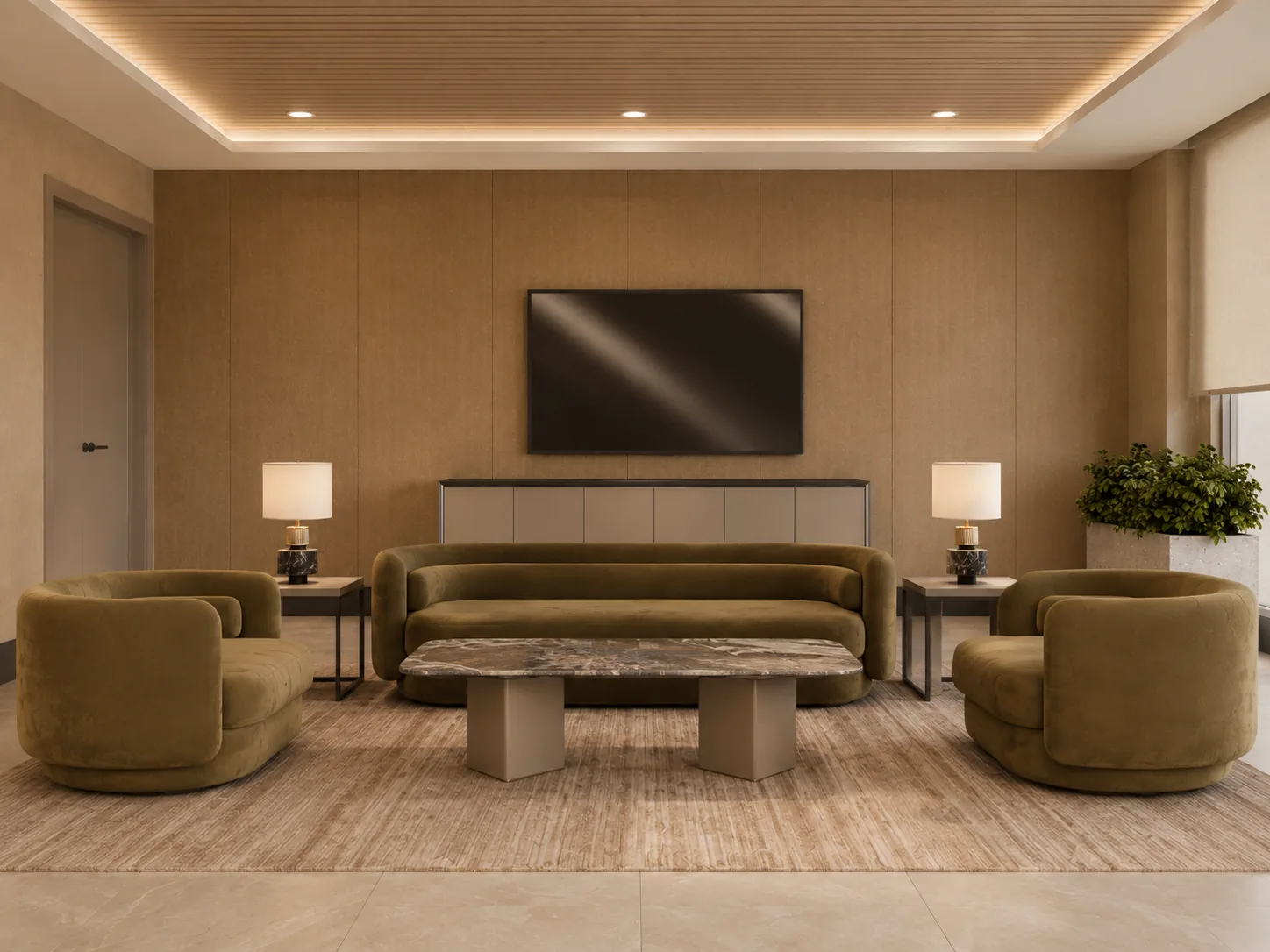
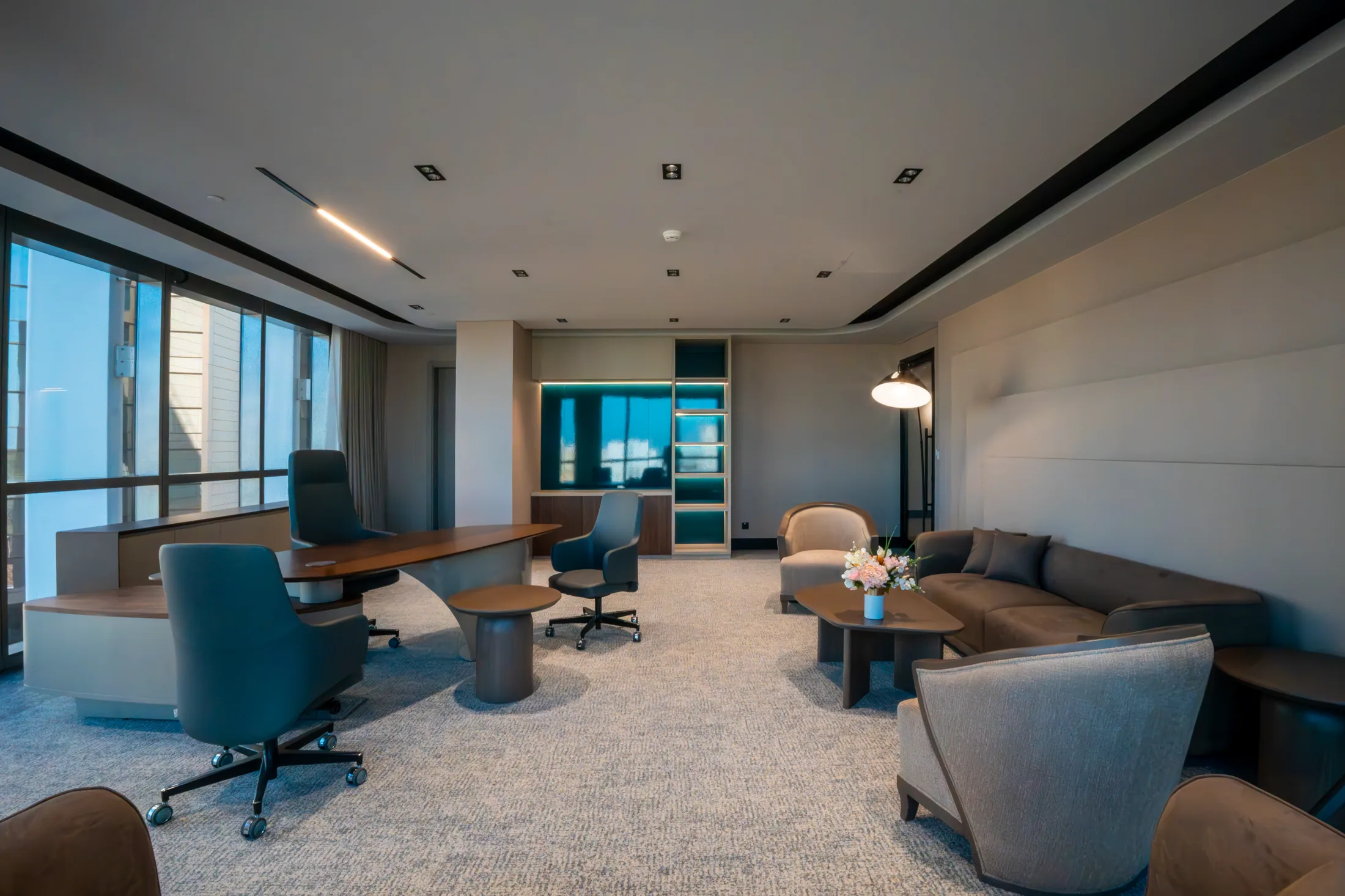
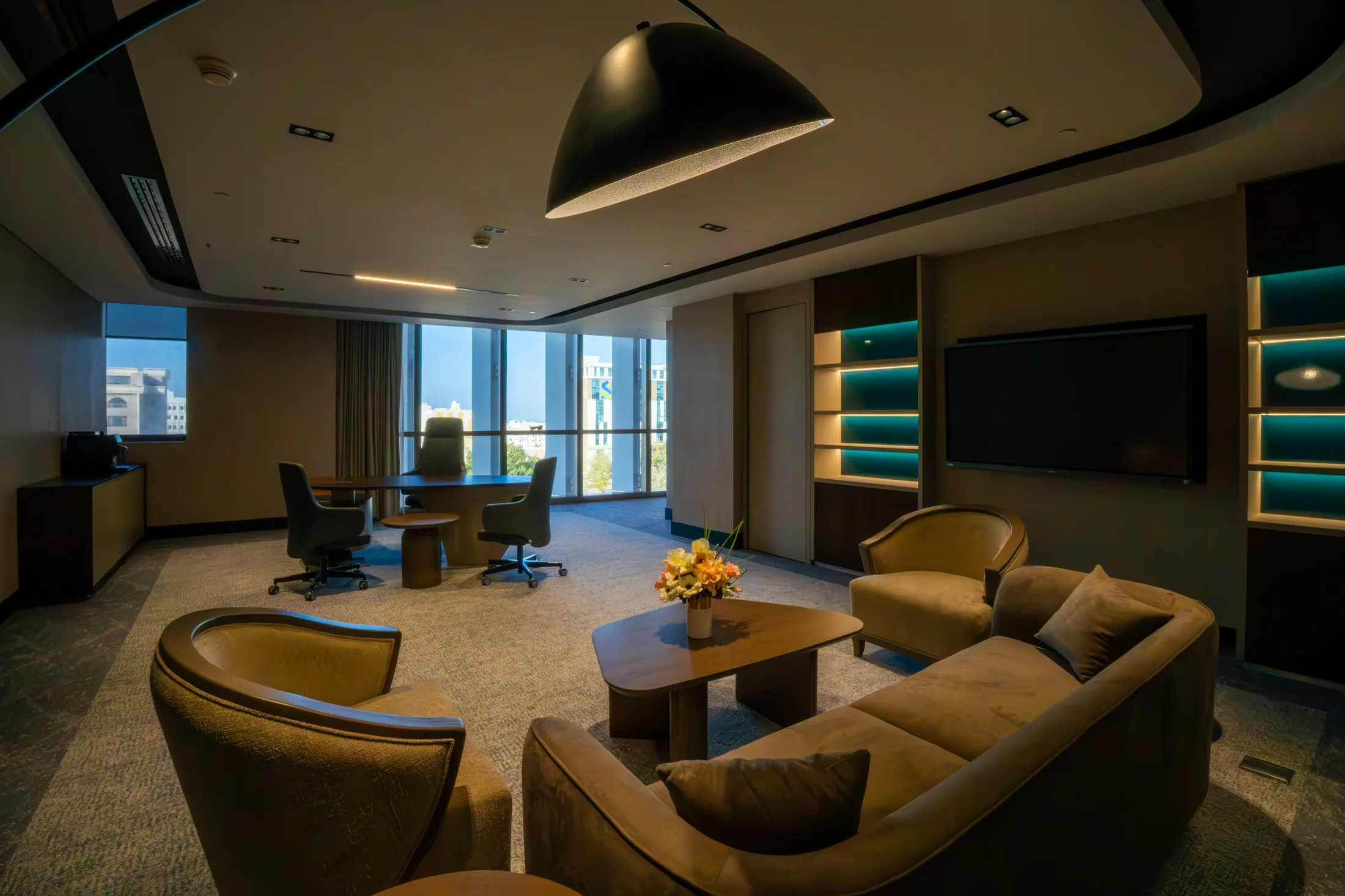
A spacious lounge, for example, Olive velvet sofas curve around a quiet lounge, giving visitors a comfortable place to settle before being shown in.
04
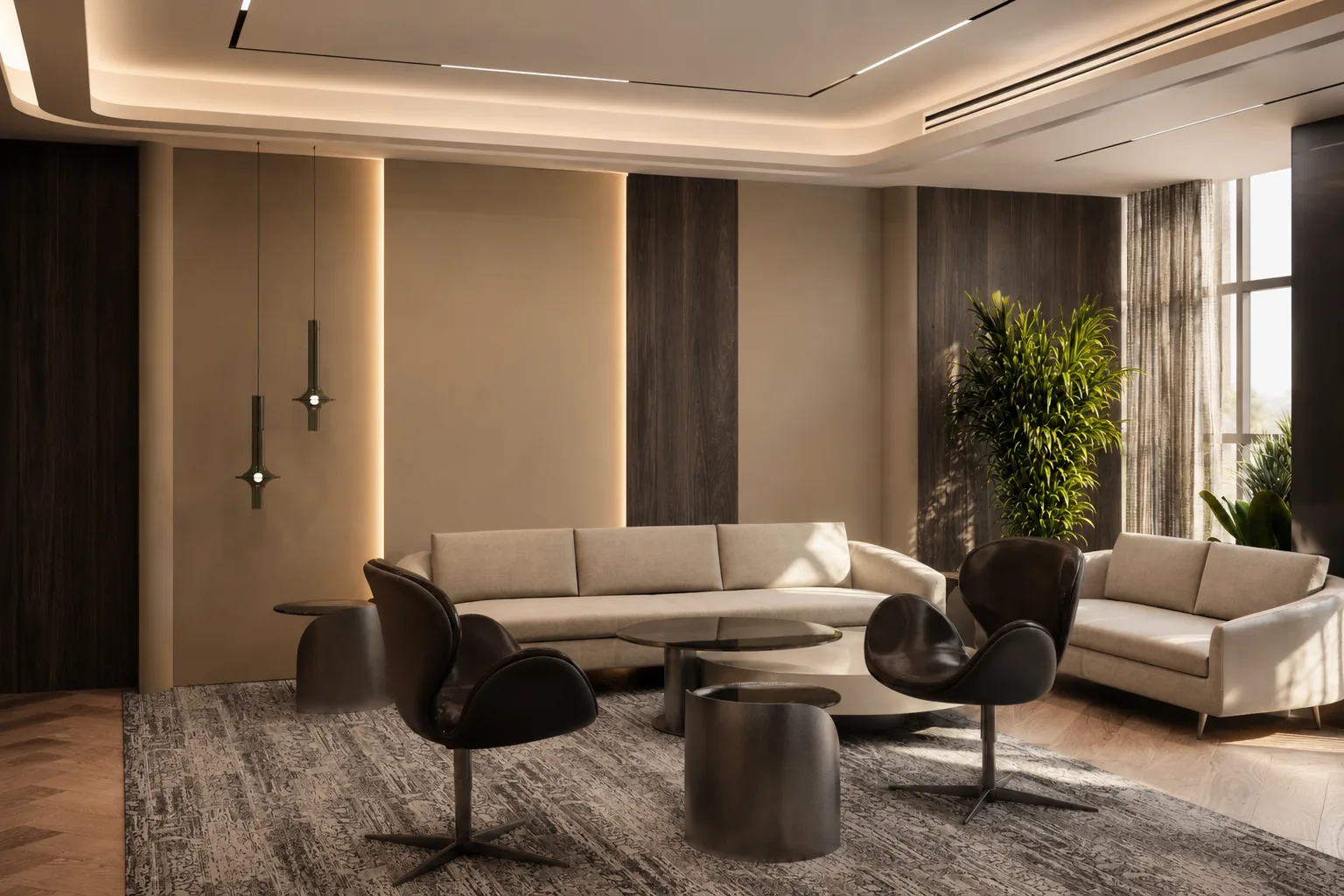
In the second office, we went in a slightly different direction and opted for darker tones — a pair of charcoal swivel chairs set against warm tones, signaling sophistication while retaining a feeling of hospitality.
Set in a cozy space signaling a sophisticated welcome.
Every VIP office sits behind a lounge built for the wait before the meeting. The welcome always unfolds first, and the desk reveals itself only after.
05
Built to Host
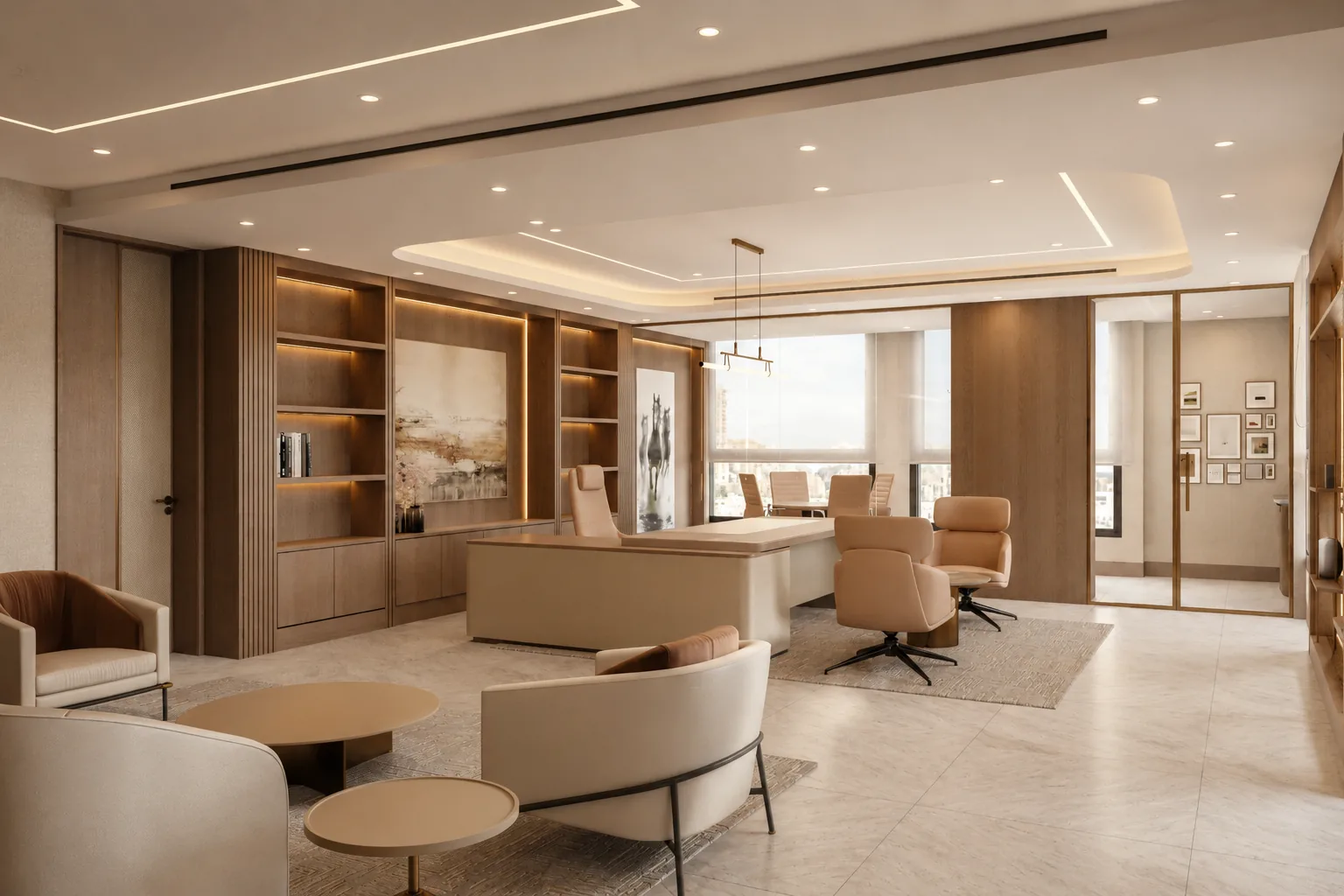
Business is built on relationships in Oman.
Rather than diving right into talking strategy, money, or growth, it is common to first converse in an informal setting like this one. Every VIP office has options for seating as befits the occasion — a lounge space, a conference table, and the CEO’s own desk. This allows the CEO to guide conversations and set the tone as they deem appropriate.
06
The Architecture of Authority
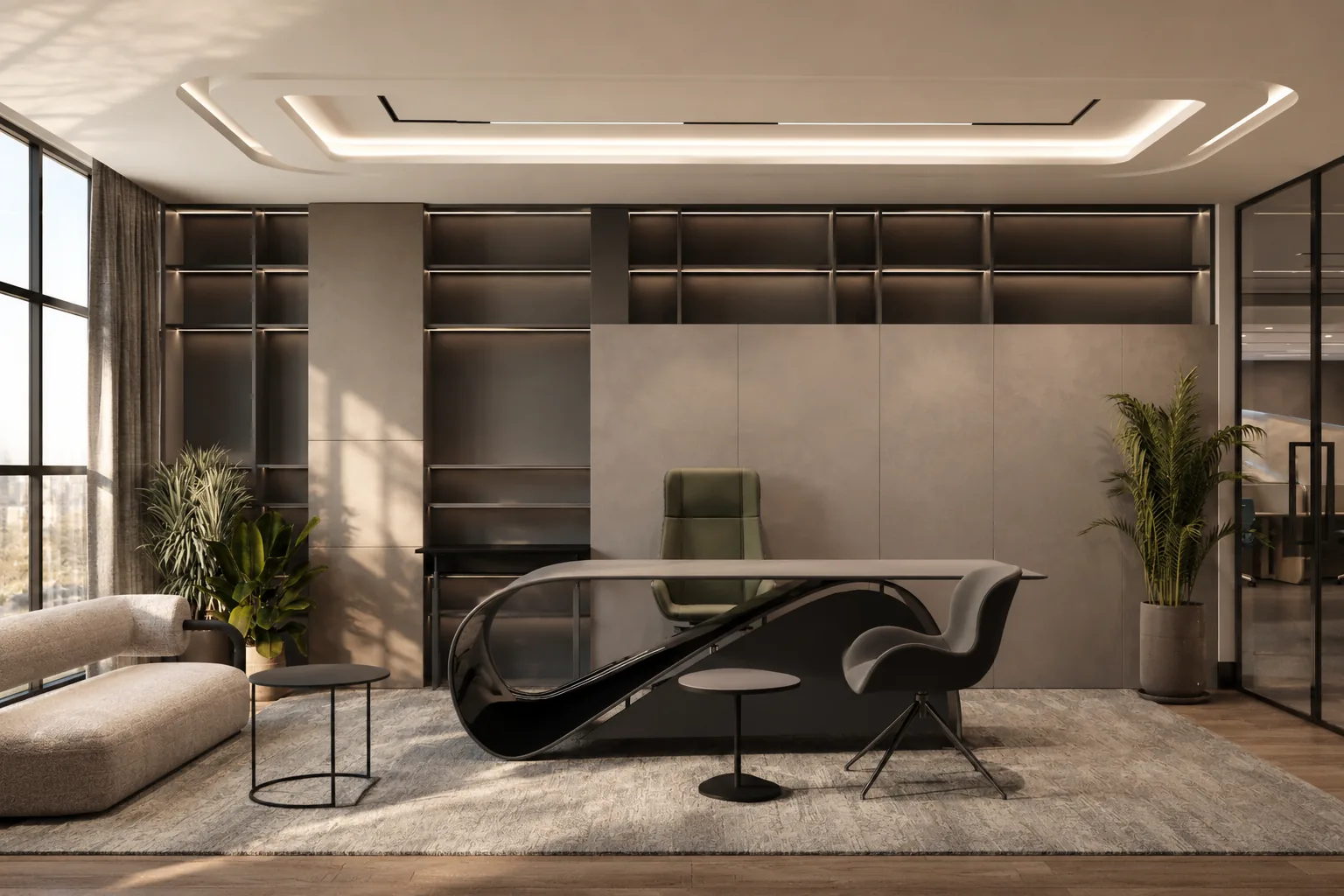
Authority is rarely created by the size of a desk alone.
It comes from the way the room is composed around it — what is revealed first, where the eye is drawn, and how deliberately each person is placed once a conversation begins.
07
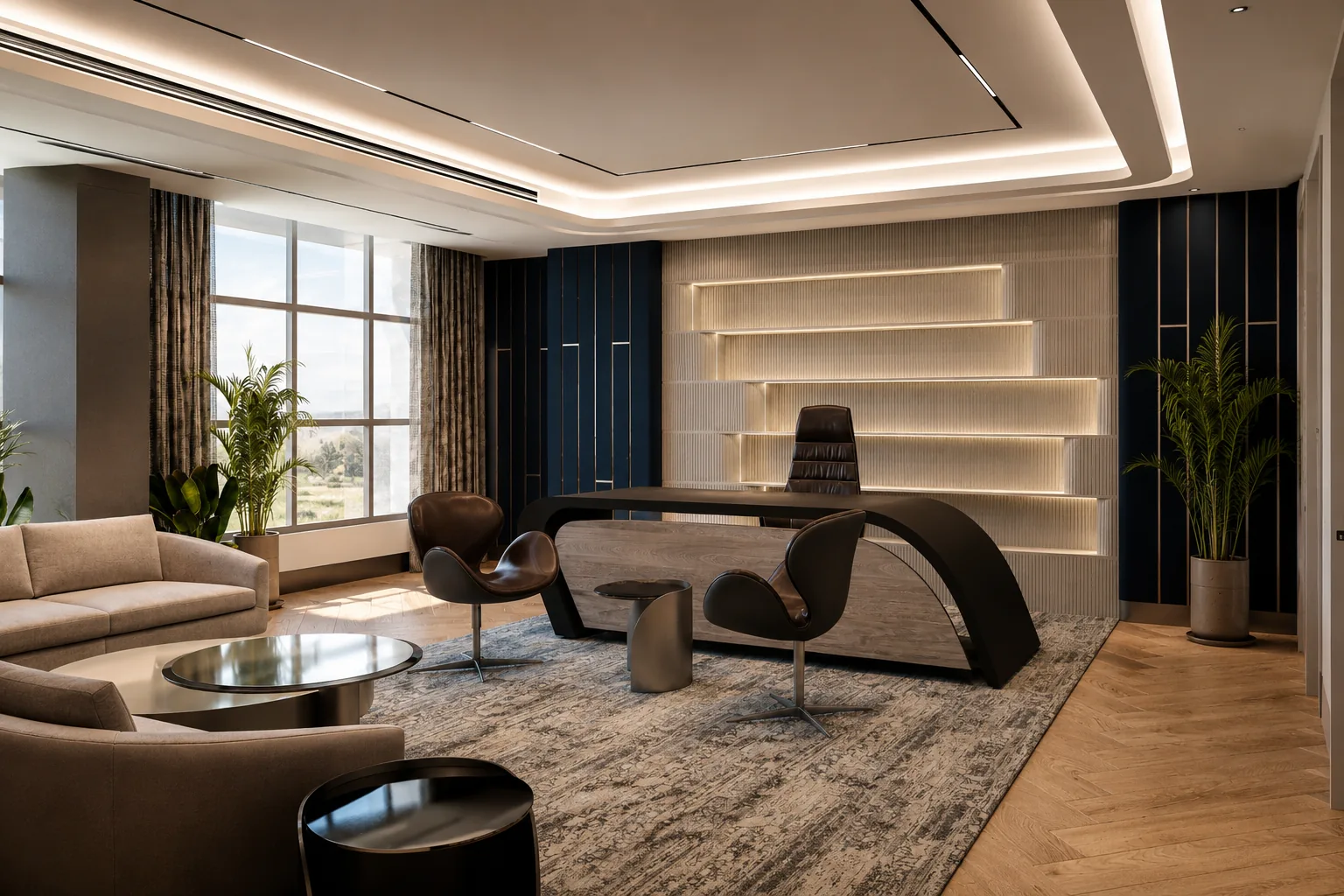
Across our executive offices, the desk usually acts as the room’s anchor without needing to dominate it. It may sit beneath a framed view, at the end of a long axis, or beyond a softer lounge setting that allows the space to reveal itself in stages. Ceiling lines, lighting, rugs, and joinery are then used to reinforce that position, creating a quiet hierarchy without resorting to excessive ornament.
08
Placement also determines the nature of an exchange. A guest seated directly across the desk enters a more formal conversation, while chairs arranged beside it allow for discussion with less distance between both parties. Larger meetings can move towards a conference table; more personal ones towards the lounge. The architecture gives the executive several ways to hold a room, rather than prescribing a single posture of authority.
09
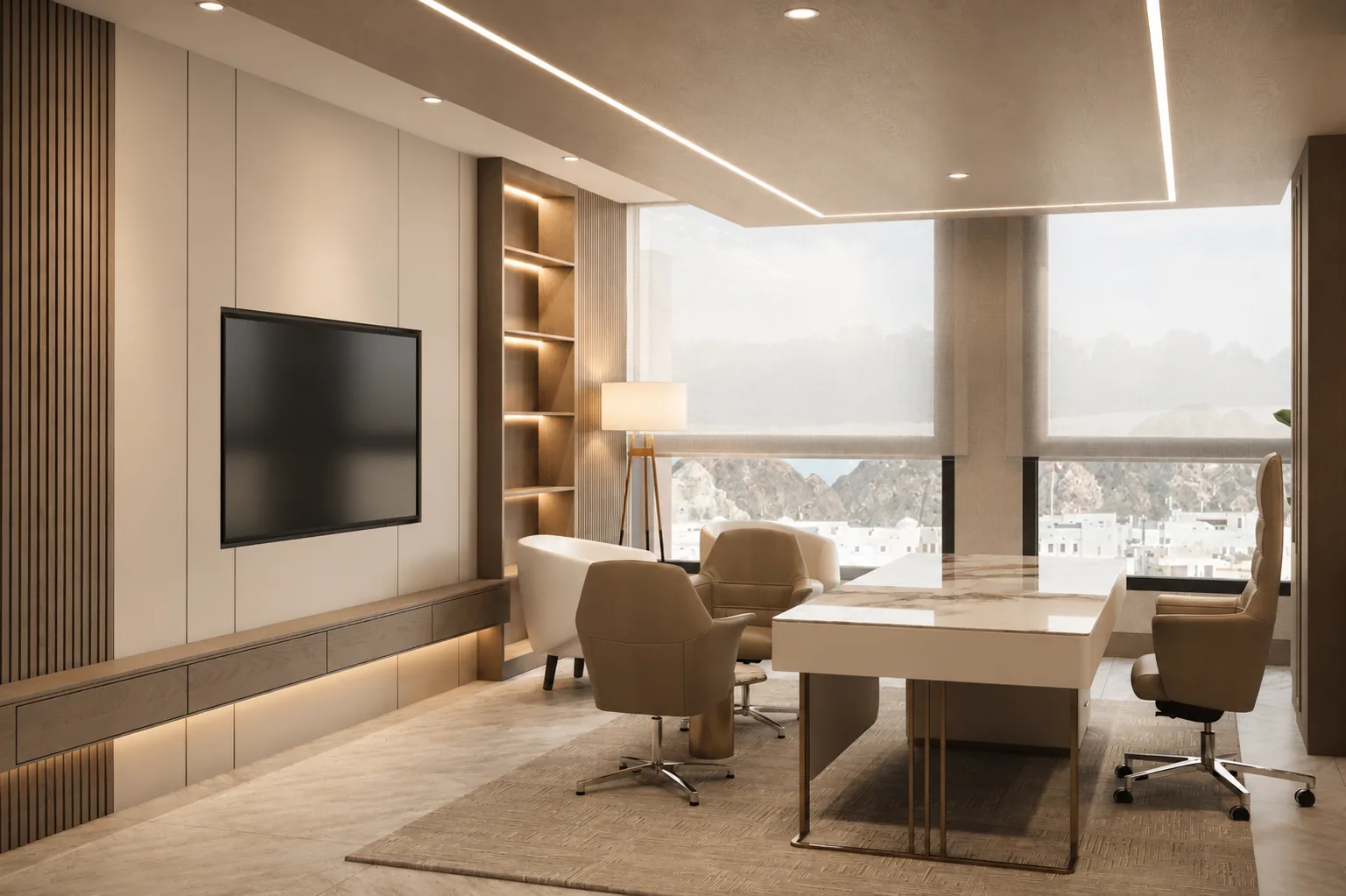
Scale and symmetry provide presence, but proportion keeps it human. A successful CEO office should feel composed rather than imposing: generous enough to carry weight, restrained enough to remain welcoming, and ordered in a way that makes leadership appear calm and deliberate.
10
Oman as the Last Word
A CEO office in Oman must do more than meet functional expectations. It has to understand the rhythm of business here: how people are received, how authority is expressed, and how hospitality shapes even the most formal meeting.
From The Founder
“When we design a CEO office, we are not designing an image of authority. We are designing for the way that person leads, receives people, makes decisions, and represents their organization. In Oman, that also means understanding that hospitality and status are rarely expressed through excess. They are expressed through warmth, dignity, and restraint. Our work is to protect that identity while allowing the CEO’s own vision and the company’s branding to remain clear. The best result is a space that belongs to its moment, but is never trapped by it.”
That understanding goes beyond market knowledge. It is about getting the feel right — the balance between strength and warmth, ceremony and ease. Each office should feel specific to the person leading from it, while still feeling unmistakably at home in Oman.
Eraya
Designing the Rooms
Where Oman Decides
From boardrooms to private suites, Eraya designs executive environments across Oman’s leading banks, ministries, and private enterprises.
Send An Enquiry